
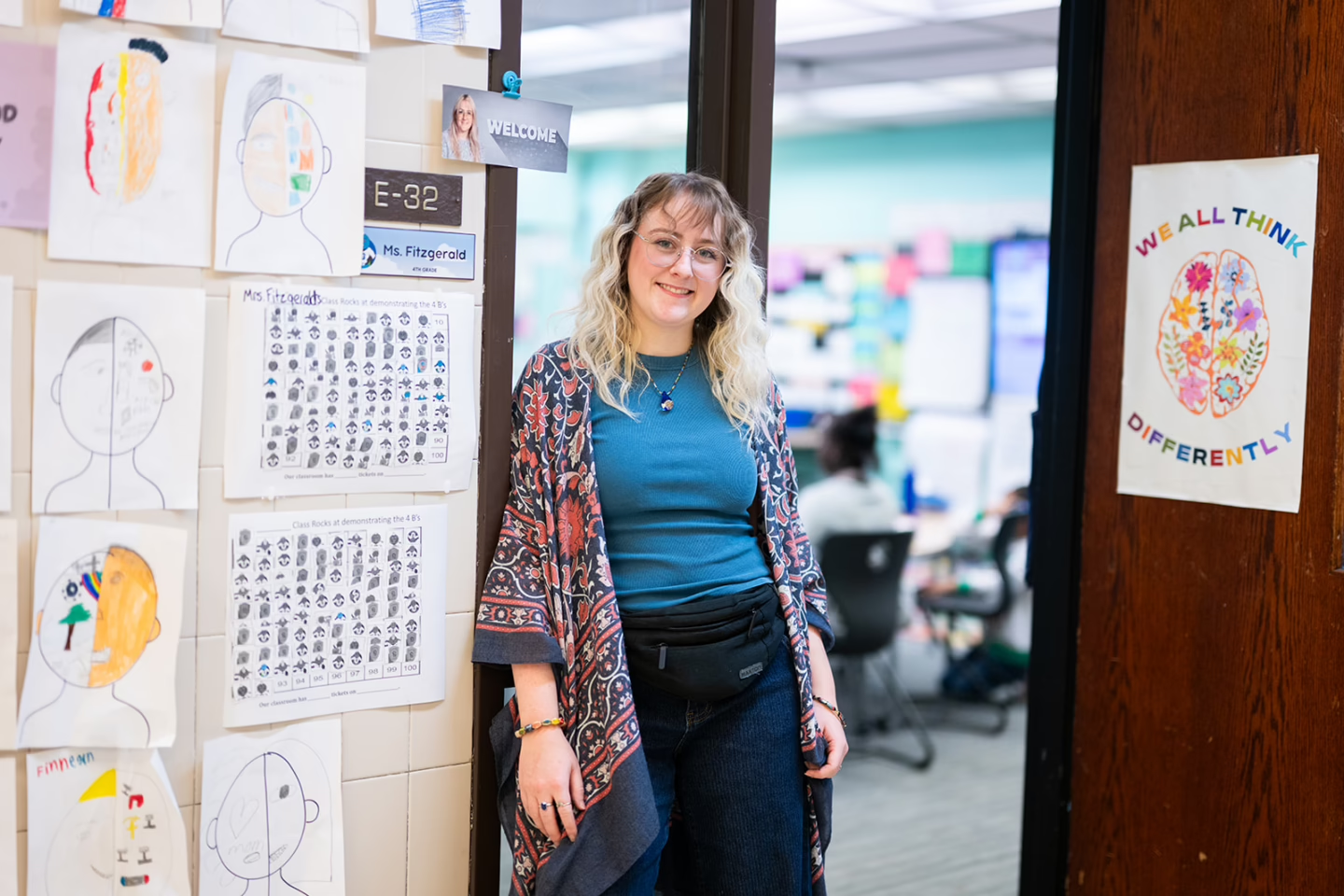
Emily Fitzgerald still remembers what it felt like to love school so deeply that she never wanted to miss a day.
Growing up in Northern Michigan, Emily attended a one-room schoolhouse from kindergarten through eighth grade. With the same teachers for multiple years at a time, she experienced school as a place of consistency, care, and deep relationships. It was an environment where learning felt joyful and personal, and one that quietly shaped how she would one day show up for her own students.
“I credit my teachers for creating that sense of joy and belonging,” Emily reflects. “When I think about my classroom now, I see pieces of that same spirit… curiosity, warmth, and strong relationships. We take care of one another like family, because that’s what we become.”
Today, Emily is a fourth-grade teacher at Gardner International School in Lansing and a 2024 Teach For America Corps Member, bringing that relationship-driven approach into a vibrant, multilingual learning community.
Finding Her Footing as a New Teacher
Emily’s first year in the classroom was challenging, exciting, and transformative all at once. Like many early-career educators, she wrestled with self-doubt, questioning whether she was creating the kind of classroom she had once loved as a student.
“I struggled to see myself as a leader and to feel confident in my abilities,” she shares. “There were times I questioned whether I was meant to be an educator at all, even though it had been my dream since I was a child.”
One moment stands out clearly.
Emily was standing at the front of her room, introducing an activity she had been excited to share, when a few disappointed sighs filled the space. The reaction hit her harder than she expected. Instead of pushing through, Emily paused, and chose honesty.
“I told them we’re all experiencing life for the first time,” she says. “I let them see me as a human, not just their teacher.”
What happened next still stays with her. Her students rushed to the front of the room and wrapped her in a giant group hug, offering apologies, encouragement, and affirmations.
“That was the moment I truly understood the power of vulnerability and relationships in the classroom,” Emily says. “I felt connected in a way that changed how I saw my role as a teacher.”
That experience shaped how Emily shows up every day. During her first year, she leaned into feedback, reflected often on her practice, and reached out for support both within her school and through the TFA and TeachMichigan network. Connecting with peers and mentors who understood the realities of early teaching helped her reframe her mindset.
“I had to shift away from seeking perfection and focus on growth,” she says. “Those challenges helped me become more grounded in my practice and more confident in the impact I was having.”
That authenticity has become a defining part of Emily’s classroom.
It’s also something her principal, Heather Bills, sees as central to Emily’s impact. “Emily consistently goes above and beyond to ensure every student is supported and successful,” Bills says. “She holds high expectations while approaching her work with genuine care for her classroom community.”
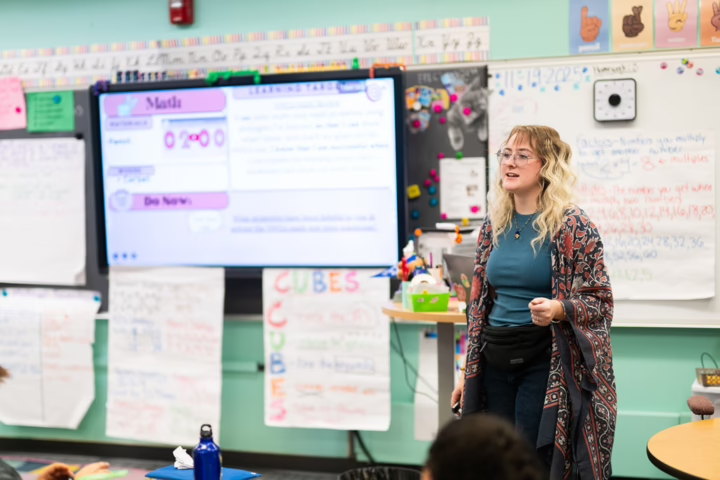
Shifting the Focus: From Perfection to Effort
Teaching in a school where students speak eight to nine different languages has pushed Emily to think deeply about what access and success really mean. For her, success isn’t about lowering expectations. It’s about creating conditions where students feel safe enough to try.
One of the most meaningful shifts in her classroom has been moving the focus from achievement to effort.
“I tell my students I love wrong answers,” Emily explains. “They show we’re thinking, learning, and getting closer to the right one.”
This mindset shapes how learning happens each day. Emily emphasizes growth over perfection and works with students to establish shared norms around communication and risk-taking. Students are encouraged to speak up, try strategies, and learn openly, even when they are unsure.
For many of her multilingual learners, that shift has been powerful. When mistakes are treated as part of the learning process rather than something to avoid, students participate more fully. Confidence builds. Engagement increases. Over time, Emily has watched students who once hesitated begin to take academic risks and trust their own thinking.
That growth has been evident to those working closely alongside her. Instructional Coach Amanda Langfeldt has mentored Emily over the past two years and has seen how intentionally she brings these practices to life.
“Although Emily is only in her second year of teaching, you would never know it,” Langfeldt says, “The growth I’ve seen has been tremendous.”
Langfeldt points to Emily’s consistent focus on student engagement and the way she supports multilingual learners through visuals, modeling, movement, and collaborative learning. She also notes the relationships Emily builds each day. “She greets each student at the door every morning, listens to their stories, and celebrates what they’re excited to share.”
The result is a classroom where learning feels possible, effort is valued, and students are supported as they grow.
Learning That Extends Beyond the Classroom
Emily’s commitment to student-centered learning doesn’t stop at her classroom door. She is intentional about creating experiences that help students connect learning to the world around them.
One example is her thoughtful planning of field trips that extend classroom instruction into real-world settings, experiences that have increased student engagement while strengthening relationships across the school community.
“These opportunities have sparked excitement for learning and strengthened connections among students and staff,” Principal Bills shares. “Emily also collaborates closely with her grade-level team, sharing resources and supporting collective problem-solving in ways that positively impact team morale and instructional consistency.”
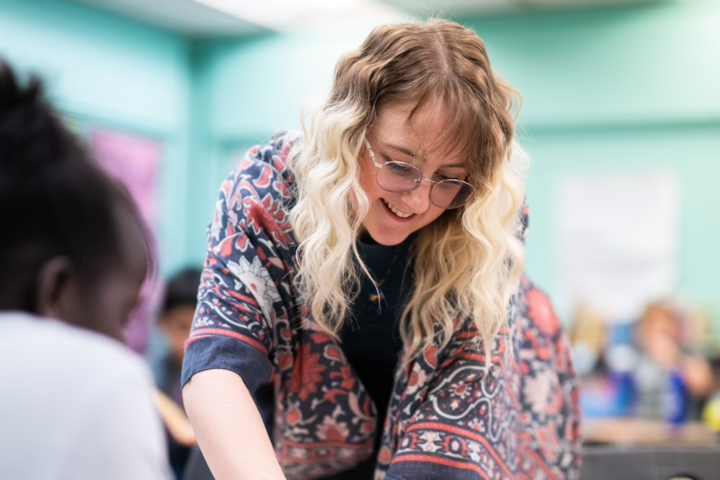
When Confidence Replaces Doubt and Students Feel Seen
Emily measures success in moments that reveal how students see themselves as learners.
She recalls one student who entered her classroom convinced they weren’t “good at school.” Through small-group instruction, consistent routines, and a relationship built on trust, that student slowly began to take risks, raising their hand, participating in discussions, and believing they belonged.
“Their confidence grew alongside their learning,” Emily says. “That shift, from frustration to belief, is what reminds me why this work matters.”
That belief is intentionally nurtured at Gardner International School, where Emily works intentionally to create a classroom culture rooted in consistency, empathy, and student voice. Clear routines help students feel grounded. Open conversations invite reflection. Effort is valued just as much as accuracy.
“My students know they can come to me with whatever they need,” she says. “We talk often about how to make our classroom better for everyone, and their reflections truly shape our community.”
That sense of connection doesn’t end when the year does. Former students continue to visit, share accomplishments, and stay in touch, something Emily considers one of her proudest outcomes as an educator.
One such moment came this year, when a former student returned with a handwritten poem and note.
“She wrote, ‘I appreciate you for teaching me,’” Emily shares. “But what stayed with me was that she said she would come back to visit me year after year, and that I’d always be in her heart.”
For Emily, moments like that remind Emily that teaching is about far more than content. It shapes confidence, relationships, and how students see themselves long after they leave her classroom.
Carrying the Work Forward
Teaching hasn’t been something Emily has navigated alone, and she’s learned how important it is to have spaces where reflection and growth are encouraged.
Being connected to other educators who understand the realities of the classroom has helped her take risks, ask questions, and keep learning, especially in her early years as a Teach For America corps member. That sense of shared experience has reinforced what she already believes: meaningful growth happens through collaboration, not isolation.
“It’s shown me that this work isn’t meant to be done alone,” she says. “Having mentors and peers who understand the challenges and growth that ome with teaching has made a huge difference.”
As her students leave her classroom, Emily hopes they carry more than academic skills.
“I want them to believe in themselves,” she says. “To know that struggling is part of growth, that their ideas matter, and that they have a voice worth sharing.”
Above all, she hopes they leave with curiosity, resilience, and pride in who they are becoming, knowing they always have someone cheering them on.
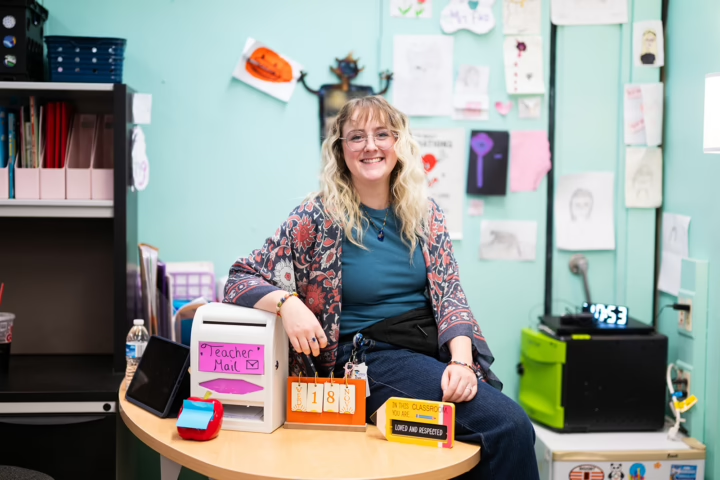
 Emily Fitzgerald
Emily Fitzgerald is a fourth-grade teacher at Gardner International School in Lansing, Michigan, and a 2024 Teach For America Corps Member. Early in her teaching career, Emily is known for building strong relationships, thoughtfully differentiating instruction, and creating a classroom where students feel supported, confident, and excited to learn. Her collaborative spirit, reflective practice, and commitment to student growth highlight her strong leadership potential as an educator.
Is there a teacher whose story needs to be heard? Share their journey with us and help amplify the voices of Michigan’s educators. We believe in the power of storytelling to inspire change and create a deeper connection with the communities we serve. Whether it’s a teacher who’s made a lasting impact, overcome significant challenges, or is simply doing extraordinary work, we want to hear from you. If you know a teacher whose story deserves to be told, reach out to us today. Let’s celebrate the heroes in our classrooms and share their stories with the world. Nominate a teacher here.