
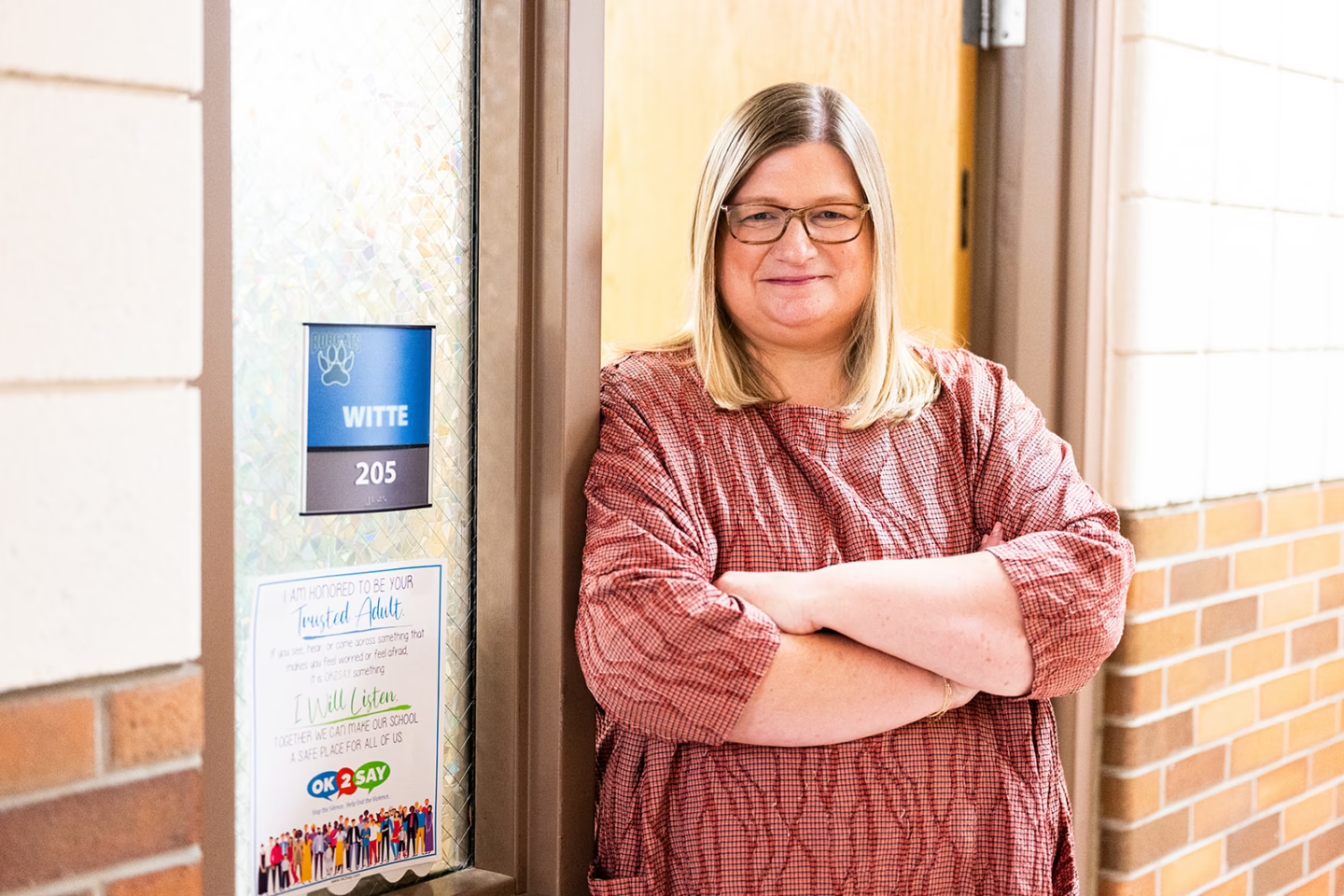
Emily Witte always knew she wanted to be a teacher.
Her second-grade teacher, Mrs. Wardell, recognizable by the butterfly tattoo on her hand, made school feel joyful and full of possibility. “She made me feel confident,” Emily recalls. “Like anything was possible if you put your mind to it.” That sense of belonging stayed with her, even when life briefly pulled her in a different direction. After being talked out of teaching due to job uncertainty, Emily eventually found her way back to the classroom and to the calling she had felt all along.
What she didn’t expect was how deeply her students would shape her.
“I thought I was going into teaching to change kids,” she says. “Instead, they changed how I see teaching and the world.”
Learning in the Hardest Places
Emily entered education later than many of her peers, first through a long-term substitute role that led to Reading Recovery work in a Title I building. Working with students who were struggling the most was eye-opening.
“I knew there was a reason I was placed in the ‘hardest’ building,” she reflects. “It became a call to action.”
When Reading Recovery was later cut, Emily moved into a split first- and second-grade classroom. It was a demanding transition that deepened her understanding of what it truly takes to support young learners. Those early years sharpened her sense of urgency and adaptability and reinforced the importance of belief, lessons that continue to guide her work today.
A Gradual Shift Into Leadership
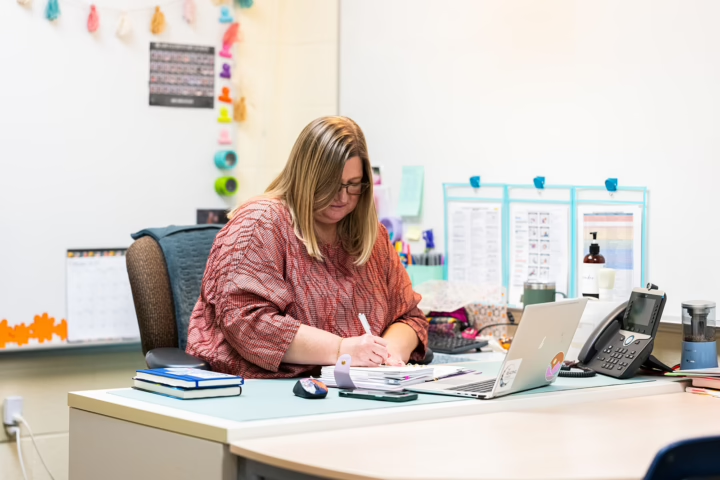
Emily did not set out to become an instructional coach. She was comfortable as an interventionist, working closely with students who needed the most support. Quiet and focused, she concentrated on strengthening her practice and meeting students where they were.
Over time, principals noticed the way colleagues gravitated toward her for guidance and reflection. They encouraged her to share her thinking, speak up during professional learning, and to step into district ELA and leadership committees, invitations that gradually reshaped her path and opened the door to her current role as an Instructional Coach at Blair Elementary.
Today, Emily sees coaching not as stepping away from teaching, but as extending its impact.
Coaching That Starts in the Classroom
One of Emily’s core beliefs is simple. To support teachers well, you have to be in classrooms.
“The more I’m in classrooms,” she says, “the more I understand what teachers are actually dealing with, both on an individual level and across the building.”
That presence allows her to identify patterns, connect through lines, and shape professional learning that is grounded in real classroom experience. It also helps address one of teaching’s greatest challenges: isolation.
“Teaching can feel incredibly isolating,” Emily says. “My goal is to make teachers feel seen and heard, and to remind them we’re in this together.”
Her principal, Kirk Ranney, sees that impact daily. He describes Emily as a leader with an impressive blend of content knowledge, instructional expertise, and the ability to listen and respond with care. He notes that her work has helped build trust and strengthen teaching across the building.
When Support Changes Everything
One coaching moment stands out.
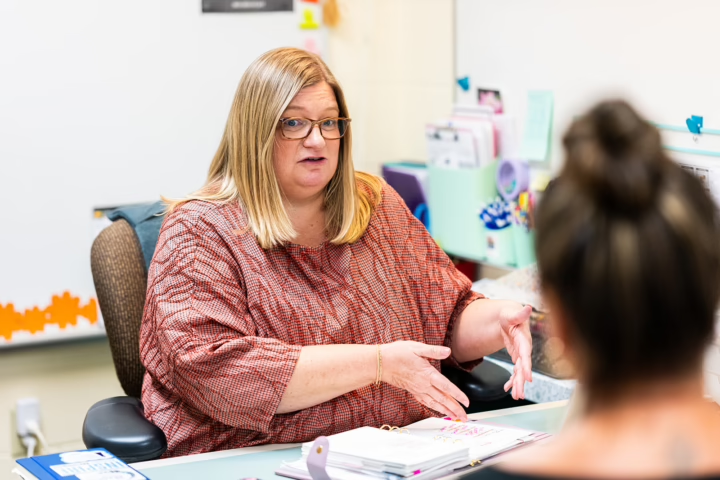
Emily was observing a teacher who was doing everything expected. She was staying on pace with a new curriculum, preparing extensively, and feeling exhausted. During their coaching conversation, Emily asked a simple question: how does this feel right now?
Together, they unpacked how much work the teacher was carrying to launch a new unit. Emily helped her rethink the lesson structure by shifting more responsibility to students through strategies like jigsaw learning and intentional grouping. This allowed the teacher to observe, facilitate, and focus support where it mattered most.
“The relief was immediate,” Emily recalls. “Sometimes the answer isn’t working harder. It’s working smarter.”
That moment affirmed why coaching matters. With trust and a thought partner, teachers who feel overwhelmed can try something new without fear or judgment.
What Impact Looks Like Now
As Emily’s role has evolved, so has her definition of impact.
She still cares deeply about student success, but she now looks for change in practice, confidence, and school culture. She notices teachers’ willingness to experiment, collaborate, and engage more deeply with their work.
“I measure impact by how the school feels,” she says. “By the relationships, and by how teachers engage with students.”
Her principal echoes that perspective, pointing to Emily’s work with new teachers in particular. He shares that she offers a judgment-free space to ask questions and receive feedback, helping set educators up for long-term success.
A School That Feels Like Family
Blair Elementary carries a reputation that is often misunderstood from the outside.
But walk through the doors, Emily says, and you will see something different. Students are greeted by name. Staff members offer hugs and support. Relationships with families run deep.
“This school is a family,” she says. “People come in expecting one thing and leave feeling welcomed and supported.”
That sense of connection is built intentionally through shared leadership, strong relationships, and the belief that even the hardest days are manageable when no one faces them alone.
Leadership Rooted in Advocacy
Beyond her building, Emily has stepped into broader leadership through district committees and statewide conversations. Attending the Michigan Literacy Summit reinforced her belief that meaningful change happens when educators, policymakers, and communities align, especially around early literacy.
“Investing early makes the greatest difference,” she says. “That work starts long before high school.”
TeachMichigan has played a key role in shaping that perspective. Through the network, Emily expanded her lens beyond her own classroom and school, gaining confidence to advocate, speak up, and contribute to change at a larger scale.
“It helped me realize I have both the capacity and responsibility to act,” she says.
Leading With Teachers in Mind
At the heart of Emily’s leadership is a deep respect for teachers’ expertise.
“Leading with teachers in mind means being intentional about what we ask of them,” she explains. “If it doesn’t strengthen instruction, it probably doesn’t deserve their time.”
Her principal describes Emily as calm, reflective, and willing to lean into difficult conversations, always grounded in positivity and actionable feedback.
Emily puts it simply.
“Leadership is about building relationships where teachers feel valued and empowered, so classrooms become places where students feel connected and supported in every way.”
 Emily Witte
Emily Witte is an Instructional Coach at Blair Elementary in Traverse City Area Public Schools and a 2023 TeachMichigan Aspiring Leader Fellow. With 20 years in education, she is known for her reflective coaching, strong instructional expertise, and commitment to building school cultures where teachers and students thrive together.
Is there a teacher whose story needs to be heard? Share their journey with us and help amplify the voices of Michigan’s educators. We believe in the power of storytelling to inspire change and create a deeper connection with the communities we serve. Whether it’s a teacher who’s made a lasting impact, overcome significant challenges, or is simply doing extraordinary work, we want to hear from you. If you know a teacher whose story deserves to be told, reach out to us today. Let’s celebrate the heroes in our classrooms and share their stories with the world. Nominate a teacher here.